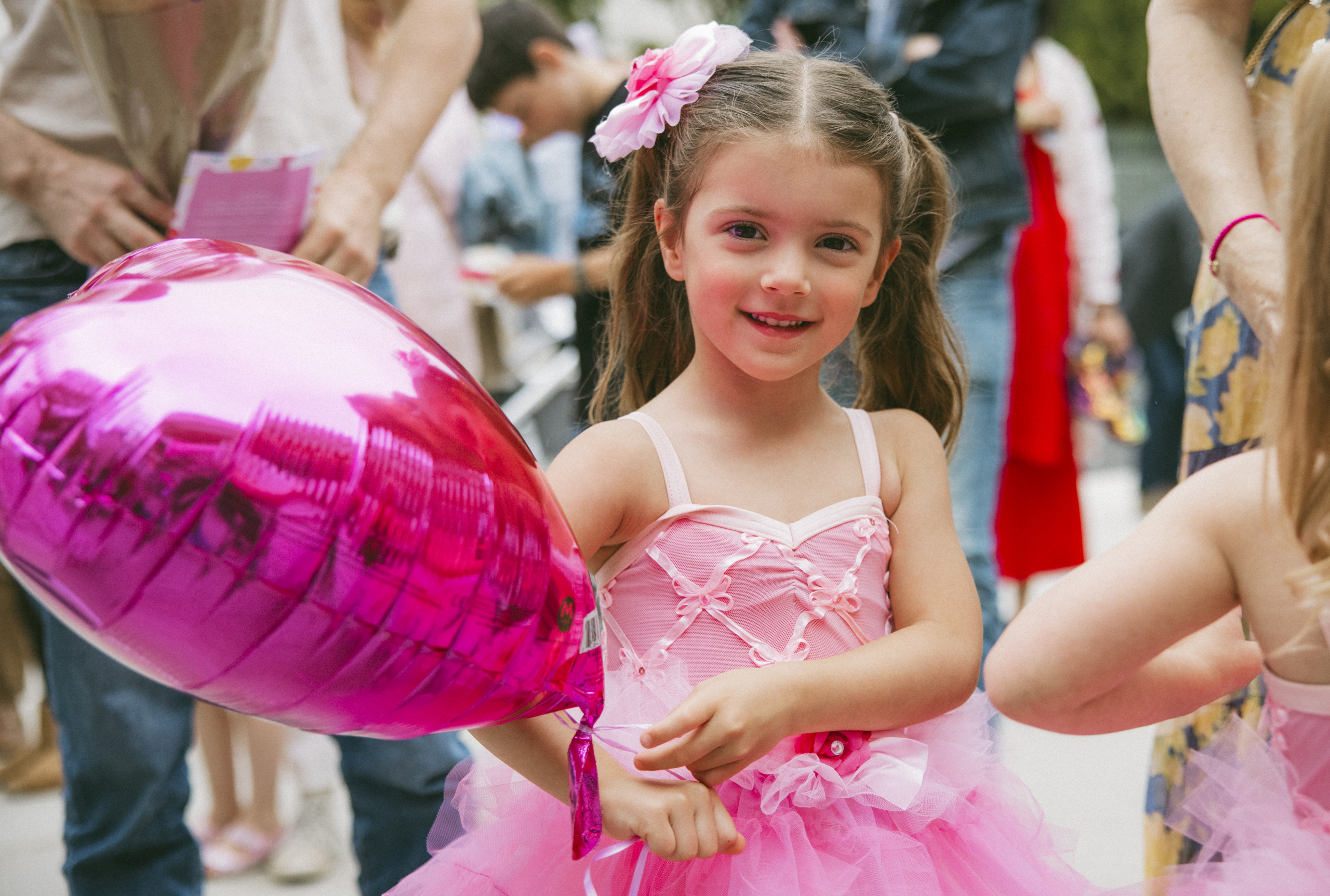
As recital approaches, we know costume fittings can bring up a wide range of emotions for dancers and families alike. For many children, stepping into a costume is exciting and confidence-building. For others, especially dancers with sensory sensitivities, it can feel uncomfortable, overwhelming, or emotionally challenging.
At Reach For The Barres, we want families to know two things can be true at the same time:
We deeply care about supporting each child with compassion and understanding.
And we also hold clear expectations around performance readiness, including how costumes are worn on stage.
Recital is a performance experience, which means costumes are intentionally designed to fit securely and consistently across the group. Unlike everyday clothing, dance costumes are meant to be more fitted so dancers can move safely, teachers can see lines and placement clearly, and the choreography presents cohesively under stage lighting.
Because of this, recital costumes should not be:
- Significantly oversized or altered to fit loosely
- Layered with visible t-shirts or additional garments underneath
- Modified in any way that changes the intended costume appearance
We know this can feel difficult for some dancers, especially those navigating tactile sensitivities, seams, textures, compression discomfort, or body-awareness challenges. If that’s your child, please know you are not alone, and your experience is valid.
At the same time, part of preparing for a performance also means preparing for the costume itself. Just like dancers practice choreography, stamina, and stage spacing, costume tolerance often benefits from preparation and gradual exposure too.
Practical Ways Families Can Help at Home
One thing occupational therapists often encourage when supporting children with sensory sensitivities is creating opportunities for gradual familiarity rather than waiting until the performance day itself.
A few ways families can help dancers feel more comfortable and confident include:
- Trying costumes on multiple times before recital weekend
- Allowing dancers to wear costumes for short periods at home while moving around
- Practicing recital hair, tights, shoes, and accessories together ahead of time
- Identifying specific discomforts (“the sequins scratch,” “the straps feel tight,” etc.) rather than generalizing the entire costume as “bad”
- Helping dancers build flexibility and coping strategies slowly and supportively over time
Often, predictability and repetition can reduce anxiety significantly. What initially feels unfamiliar or uncomfortable may become much more manageable with practice and preparation.
A Supportive Alternative We Can Offer
For dancers who benefit from an added sensory layer, we are happy to allow a nude, long-sleeved leotard underneath costumes as an accommodation option when appropriate.
A style similar to the Capezio Long Sleeve Leotard can often help dancers feel more regulated and comfortable while preserving the intended look of the costume on stage.
This option may:
- Reduce discomfort from sequins, appliqués, or costume fabrics
- Provide a smoother sensory barrier against the skin
- Help dancers feel more secure and regulated during performance
We encourage families considering this option to:
- Practice wearing the full costume combination at home before recital weekend
- Allow dancers time to move, dance, and acclimate gradually
- Reach out to us early if additional support or discussion may be helpful
Building Flexibility Together
One of the beautiful and sometimes challenging parts of dance education is that it asks dancers to grow not only technically, but emotionally too.
Learning to wear a costume, perform under bright lights, navigate unfamiliar textures, and move through mild discomfort in a supported environment can all be part of developing resilience, adaptability, and confidence over time.
That growth looks different for every child.
As a studio, we remain committed to creating an environment where dancers feel supported while also helping them rise to shared expectations that are part of participating in a team performance experience.
Thank you, as always, for partnering with us with trust, communication, and care as we prepare to celebrate all our dancers on stage this recital season. 💛


When Hair Feels Like the Hardest Part
Supporting Dancers Through Hair Day Meltdowns Without Losing the Plot
If you’ve ever found yourself negotiating a ponytail like it’s an international peace treaty… you are not alone.
For some dancers, having their hair brushed, slicked back, sprayed, pinned, or styled for dance class can suddenly become a major emotional event. And as recital approaches, those reactions sometimes get even bigger.
Cue the tears. The resistance. The dramatic collapse onto the bathroom floor. The “I don’t want to go anymore!” declarations.
We see you.
And while it can feel tempting in those moments to either:
There’s actually a really important opportunity hiding underneath the struggle.
Not because the bun itself matters more than your child. But because learning to move through discomfort with support is part of growing.
At Reach For The Barres, we believe children are capable of doing hard things, especially when the adults around them stay calm, clear, and connected.
Sometimes the Hair Isn’t Really the Problem
Of course, some children are naturally more sensitive than others.
But if we’re being honest? A lot of the struggle families experience around hair, dress code, tights, shoes, or recital preparation often has less to do with true inability and more to do with patterns that have quietly formed over time.
Children are incredibly smart.
They learn quickly whether expectations are firm, flexible, negotiable, avoidable, or dependent on how big the emotional reaction becomes.
And when adults repeatedly:
Children unintentionally learn that escalation changes the outcome.
That does not make them manipulative. It makes them children.
Part of our role as adults is helping them understand:
That lesson matters far beyond dance class.
What Doesn’t Usually Help
When emotions are high, it’s easy to accidentally reinforce the struggle in ways that make future hair days even harder.
Some common responses that often increase the cycle:
Children take emotional cues from us.
When adults communicate confidence, calmness, and consistency, children are far more likely to eventually settle into the routine.
What Does Help
Normalize It
Instead of treating hair day like an emergency, try:
or
Calm confidence matters.
Practice Before It Matters
One of the biggest mistakes families make is waiting until recital morning.
Practice the hairstyle ahead of time. Not perfectly. Not for hours. Just consistently.
A few low-pressure practice sessions can dramatically reduce anxiety because the experience becomes familiar instead of emotionally loaded.
You can even:
Predictability helps nervous systems.
Offer Appropriate Ownership
Children often regulate better when they feel some sense of participation.
That might look like:
Ownership is different from deciding whether expectations exist.
The hairstyle itself may still need to meet class or recital requirements.
Keep the Goal Bigger Than the Hair
At the studio, hair requirements are not about perfection or appearance pressure.
They serve practical and performance-based purposes:
More importantly, recital teaches children something bigger than choreography.
It teaches preparation. Follow-through. Community responsibility. Showing up even when something feels uncomfortable.
Those are life skills.
Boundaries Need Follow-Through
One of the hardest parts of parenting is realizing that once a boundary is set, it has to be consistently upheld in order for children to trust it.
If hair must be up for dance class or performance days, then that expectation needs to remain steady even when there are tears, frustration, complaints, or pushback.
Not harshly. Not coldly. But calmly.
Children feel safest when adults communicate:
That steadiness builds resilience.
Because confidence is not built by removing every uncomfortable moment. Confidence is built when children realize:
Our Encouragement to Families
The recital season can bring out big emotions for dancers and adults alike.
But often, the moments children resist the most become the moments that quietly build confidence later.
The dancer who cried through hair prep this year may very well be the dancer confidently helping a younger sibling with their bun a few seasons from now.
Growth rarely looks graceful while it’s happening.
Sometimes it looks like a child crying through a bun before class. And sometimes it looks like a parent learning how to hold loving boundaries without backing away from them.
And as always, we’re cheering your dancer on every step, spin, bun, bobby pin, and brave moment along the way.
With love from the dance floor,
Team Reach ❤️
When Costumes Feel Hard: Supporting Sensory Needs While Preparing for Performance
As recital approaches, we know costume fittings can bring up a wide range of emotions for dancers and families alike. For many children, stepping into a costume is exciting and confidence-building. For others, especially dancers with sensory sensitivities, it can feel uncomfortable, overwhelming, or emotionally challenging.
At Reach For The Barres, we want families to know two things can be true at the same time:
We deeply care about supporting each child with compassion and understanding.
And we also hold clear expectations around performance readiness, including how costumes are worn on stage.
Recital is a performance experience, which means costumes are intentionally designed to fit securely and consistently across the group. Unlike everyday clothing, dance costumes are meant to be more fitted so dancers can move safely, teachers can see lines and placement clearly, and the choreography presents cohesively under stage lighting.
Because of this, recital costumes should not be:
We know this can feel difficult for some dancers, especially those navigating tactile sensitivities, seams, textures, compression discomfort, or body-awareness challenges. If that’s your child, please know you are not alone, and your experience is valid.
At the same time, part of preparing for a performance also means preparing for the costume itself. Just like dancers practice choreography, stamina, and stage spacing, costume tolerance often benefits from preparation and gradual exposure too.
Practical Ways Families Can Help at Home
One thing occupational therapists often encourage when supporting children with sensory sensitivities is creating opportunities for gradual familiarity rather than waiting until the performance day itself.
A few ways families can help dancers feel more comfortable and confident include:
Often, predictability and repetition can reduce anxiety significantly. What initially feels unfamiliar or uncomfortable may become much more manageable with practice and preparation.
A Supportive Alternative We Can Offer
For dancers who benefit from an added sensory layer, we are happy to allow a nude, long-sleeved leotard underneath costumes as an accommodation option when appropriate.
A style similar to the Capezio Long Sleeve Leotard can often help dancers feel more regulated and comfortable while preserving the intended look of the costume on stage.
This option may:
We encourage families considering this option to:
Building Flexibility Together
One of the beautiful and sometimes challenging parts of dance education is that it asks dancers to grow not only technically, but emotionally too.
Learning to wear a costume, perform under bright lights, navigate unfamiliar textures, and move through mild discomfort in a supported environment can all be part of developing resilience, adaptability, and confidence over time.
That growth looks different for every child.
As a studio, we remain committed to creating an environment where dancers feel supported while also helping them rise to shared expectations that are part of participating in a team performance experience.
Thank you, as always, for partnering with us with trust, communication, and care as we prepare to celebrate all our dancers on stage this recital season. 💛
Why Showing Up Matters
Bring Your Person to Class Week
Some of the best memories don’t come from big events.
They come from small, shared moments.
As Bring Your Person to Class Week approaches, we know stepping into the studio might feel like one more thing on a full schedule. Totally fair.
But this is one of those things that tends to give more than it asks.
It’s a chance to step into your dancer’s world for a moment.
To see what they see.
To feel what they feel when they walk into class each week.
And that shift, even just once, can be really special.
When you join them, something simple happens.
You’re no longer watching from the lobby or hearing about class on the drive home.
You’re in it with them.
You meet the friends they talk about.
You experience the rhythm of class.
You start to understand why they love it.
There’s also something powerful in what your dancer sees.
They see you try something new.
They see you laugh, maybe mess up, and keep going.
That kind of modeling builds confidence in a way we can’t always teach from the front of the room.
And yes, there are all the benefits we could list.
Movement supports coordination, memory, and focus.
Dance creates space for expression and connection.
But more than anything, this week is about sharing an experience together.
You don’t have to be a dancer.
You don’t have to get it right.
You just have to show up.
Even if it’s for part of class. Even if it feels a little out of your comfort zone.
Because more often than not, the families who come in a little unsure…
leave really glad they did.
🩷 – Reyana
The Sweetest Little Tradition
Why Families Love Our Costume Portrait Mini Sessions
There’s something really special about seeing your dancer in their costume for the first time.
Not just in passing before class or during a quick photo on your phone, but fully present, standing tall, stepping into the version of themselves they’ve been working toward all season.
Our Costume Portrait Mini Sessions have quietly become one of the most loved little traditions at Reach For The Barres and for good reason. They’re simple, intentional, and incredibly meaningful.
A Moment to Pause and Celebrate
Our season moves quickly. Classes, growth, routines, friendships, it all builds toward the stage.
These mini sessions create space to slow that down, even just for a few minutes.
A chance for your dancer to feel proud of what they’ve learned, and for you to hold onto who they are in this exact season.
There’s something powerful that happens when a dancer steps in front of the camera.
You can see it in the way they carry themselves. A little more grounded, a little more sure.
These portraits often capture something beyond the costume. They reflect the confidence, personality, and growth that’s been building all season long.
A Keepsake That Grows With Them
Over time, these portraits become more than just photos.
They turn into a visual timeline of your dancer’s journey, each season adding another layer to the story.
It’s
one of those traditions families don’t always expect to love as much as they do… until a few years pass and they can see just how much has changed.
We’ve designed these sessions to be easy for families and special for dancers:
Each Mini Session Includes:
Optional Add-Ons:
Because each session is reserved for a single dancer, space is limited and intentionally kept small to create a calm, focused experience.
A Few Helpful Reminders
A Little Moment That Lasts
The recital is a beautiful celebration, but it’s also fast. These portraits give you something to hold onto. A quiet, intentional snapshot of your dancer’s hard work, joy, and growth right now.
And season after season, that becomes something truly special.
We can’t wait to capture your dancer’s moment.
–> BOOK YOUR’S NOW!